Why I'm Running for Ward 1
Ward 1 deserves a councillor with the vision, skills, and courage to speak up for the people who call it home. Here's why I decided to put my name on the ballot.
Ward 1 is home to some of Burlington's most vibrant neighbourhoods with a history that goes back 200 years — from the lakefront to the escarpment, from longtime neighbours to growing families. But recently I've had concerns: residents feel unheard, development is outpacing infrastructure, neighbourhood character and property values are being sacrificed in the name of density, and the people making decisions about our neighbourhood don't seem to live the same reality we do.
I've lived in Ward 1 my entire life. I've watched the traffic on Plains Road get worse every year. I've seen parks go under-maintained while new condos go up that do not take into consideration the character of the area, all in the name of "affordable housing".
That's why I'm running.
I'm not a career politician. I'm a neighbour who has gotten tired of waiting for someone else to fix things. While growing up our parents would ask "what is the plan for Aldershot" and the answer was always, "we are working on the City Plan". I believe in evidence-based decision-making, genuine community consultation, and a council that treats every resident's concern as worth addressing — not just the ones that make headlines. When our own councillor tells me 'the developers are too powerful,' that's not an explanation — it's an admission. And the conflict of interest that came to light after the last election only deepens that concern.
If you share that vision for Ward 1, I'd be honoured to have your vote on October 26.
A Real Plan for Plains Road Traffic
Plains Road is Ward 1's main throughway — and it's not keeping up with the community around it. Here's what I'll push for on day one.
Ask any Ward 1 resident about their daily commute and Plains Road comes up almost immediately. It's the spine of our community — connecting Aldershot to the rest of Burlington, carrying local traffic, regional commuters, cyclists, and pedestrians all on the same corridor. And right now, it's not working well for any of them.
The frustrations are real and they're consistent: signal timing that doesn't reflect actual traffic patterns, intersections where pedestrians feel rushed or ignored, and a cycling experience that asks riders to share lanes with fast-moving vehicles. Meanwhile, growth in the surrounding neighbourhoods keeps adding demand to a road that hasn't fundamentally changed in decades.
Here's what I'll advocate for:
Adaptive Signal Timing on Plains Road
Signal timing on Plains Road is still largely fixed-cycle — it doesn't respond to real-time conditions. Adaptive signal technology adjusts green times based on actual traffic flow and has been shown to reduce corridor travel times by 10–15% in comparable Ontario communities. Burlington has the capability. Plains Road should be next in line.
Safer Crossings at Key Intersections
Several intersections along Plains Road — particularly near schools, parks, and the GO station — need longer pedestrian crossing intervals and better visibility. I'll push for a formal review of crossing times and advocate for raised crosswalks at high-volume mid-block locations where pedestrian activity is highest.
A Cycling Corridor That Actually Works
Plains Road is a provincial highway — it's not the right place for protected cycling infrastructure, and I won't pretend otherwise. That position was reinforced on August 14, 2026, when the Court of Appeal for Ontario ruled that the province has the constitutional authority to remove bike lanes from roads entirely, finding there is no obligation to regulate road use in any particular manner. The Ford government now has the authority to clear 19 kilometres of protected lanes from Bloor, Yonge, and University Avenue in Toronto. The message from Queen's Park is clear: cycling infrastructure on provincial highways is not guaranteed, and advocating for it on Hwy 2 would be a poor use of Ward 1's political capital.
Cyclists travelling east-west through Aldershot are better served on Townsend Avenue or North Shore Boulevard, where existing bike lanes provide a safe, practical alternative with substantially lighter traffic. What I will push for is better wayfinding signage directing cyclists to those routes before they find themselves on a highway.
Beyond that, I'll advocate for a longer-term solution that could genuinely transform cycling in Burlington: a dedicated multi-use trail running along the CN Rail corridor easement, connecting Aldershot GO Station east through to Appleby GO. The rail easement already exists, it runs east-west through the heart of Ward 1, and a trail along it would give cyclists a safe, direct, off-road connection that no provincial government can take away. This is exactly the kind of durable, community-owned infrastructure Burlington should be pursuing — and I'll be pushing for a feasibility study as a first step.
Widening the North Service Road to Four Lanes
One of the most practical investments the City can make is widening the North Service Road from its current two lanes to four, from Waterdown Road through to Brant Street. Right now, drivers heading east or west through Aldershot have essentially one option: Plains Road. That's not a traffic management strategy — it's a single point of failure. A widened North Service Road would give commuters, delivery vehicles, and local traffic a genuine parallel route with real capacity, distributing the load and taking meaningful pressure off Hwy 2.
This matters even more when you factor in what's coming. The proposed intensification around Aldershot GO Station and the development pressure building along King Road north of Plains will add thousands of new residents and daily trips to a corridor that's already at capacity. A two-lane service road won't absorb that growth — a four-lane one can. Planning for that now, before the construction fences go up, is exactly the kind of forward thinking Ward 1 needs from its councillor. I'll be pushing for the North Service Road widening to be included in Burlington's next Transportation Master Plan update as a priority capital project.
None of this requires reinventing the wheel. These are proven approaches used in communities across Ontario. What's been missing is a councillor who treats Plains Road as the priority it is for Ward 1 residents. That's exactly what I intend to be.
Protecting Ward 1's Green Spaces
Development pressure is real — but so is the value of the parks, trails, and natural areas that make Ward 1 worth living in.
Ward 1 sits between Lake Ontario and the Niagara Escarpment — two of the most significant natural features in the entire region. We have waterfront parks, ravine trails, and neighbourhood green spaces that residents use every single day. These aren't amenities. They're part of what makes Ward 1 worth living in.
But they're under pressure.
As the city grows and development intensifies, green spaces face encroachment, under-investment, and in some cases outright loss. Parkland dedication requirements don't always keep pace with density. Maintenance budgets get cut when times are tight. And natural heritage features — wetland buffers, ravine edges, tree canopy — can quietly disappear in planning negotiations that residents never have a seat at.
Here's what I'll fight for:
Full parkland dedication
I'll oppose any variance that reduces the parkland a developer is required to provide. If the city is accepting cash-in-lieu, that money needs to go directly to Ward 1 park improvements.
Trail connectivity
Ward 1 has the bones of a great trail network. I'll push for the gaps to be closed so residents can move through the ward on foot or by bike without hitting dead ends.
Natural heritage protection
The waterfront corridors need stronger buffers. I'll advocate for science-based setbacks and oppose development that fragments natural areas
Maintenance funding
A park that's poorly maintained sends a message to residents that they don't matter. I'll push for consistent, adequate maintenance budgets for every park in the ward.
Ward 1's green spaces are an inheritance. My job as councillor is to protect them for the next generation.
What I Bring to Council
Thirty years of making sure the numbers are right — and asking hard questions when they aren't. Here's why that matters for Ward 1.
I've spent most of my working life in rooms where the stakes are high and the numbers have to be right. Boardrooms, audit committees, government briefings. Places where you can't bluff your way through a balance sheet and where the consequences of getting it wrong fall on real people.
That's the background I'd bring to Ward 1 council. Not as a credential to wave around — but as a way of seeing. When I look at a capital budget or a development proposal, I know what questions to ask, what to look for in the footnotes, and when something doesn't add up. When the Federal Government asked me to write a report on "How to Finance First Nations Infrastructure with an Eye to Self Governance" the Minister of INAC believed that my "out of the box thinking" that I've demonstrated in corporate restructurings would be of benefit to Canada.
Learning to follow the money
I'm a CPA — earned the hard way, through years of doing the work and then returning to school in 2008 to obtain it. Over three decades I've served as Controller and CFO across a range of organizations: private or publicly traded companies, major industrial operations, not-for-profits. Each one taught me something different about how institutions manage money, and how easily that management can drift when no one is paying close attention.
Some of the most instructive years were spent in the financial industry — the kind of environment where a rounding error in a financial consolidation can have real consequences downstream or can hurt a company's reputation. You learn to be precise. You learn to build systems that hold up under scrutiny. And you learn that transparency isn't just a nice-to-have; it's what keeps organizations honest.
The work that changed how I think about government
As I mentioned earlier, in 2011, I was asked by the Federal Government to develop a financial model for the Minister of Indigenous and Northern Affairs — looking at alternative ways for Canada to finance infrastructure on reserve. The core question was whether there were smarter financing models that could stretch $1.2 billion in annual spending further, and potentially save $500 million a year without cutting services.
That project stuck with me. Not because of the dollar figures, but because of what it revealed: that governments often spend money the way they always have, not because it's the best way, but because no one has sat down and done the analysis or asked the simple question "can we do better". I came away convinced that the same rigour applied to municipal finance could make a real difference — and that most councils simply don't have anyone at the table who knows how to do it.
More than a spreadsheet
My undergraduate degree was in Psychology, which might seem like an odd pairing with a finance career — but it's shaped how I work. Understanding how people make decisions, how groups form consensus, how trust gets built or broken: those things matter enormously in a council chamber. The best financial analysis in the world doesn't move anything if you can't bring people along with you.
I've also tried to give back where I can — serving on an advisory board supporting Indigenous business development in Toronto, or as an examiner for the CMA professional presentation assessments.
Why Ward 1, why now
I live here. I walk these streets, use these parks, sit in the same traffic. And when I look at how decisions get made at Burlington City Hall — the budget approvals, the development negotiations, the way community input gets weighed — I see a process that would benefit from someone who knows how to read between the lines of a financial document and isn't afraid to say so out loud. No conflicts of interests that can influence decisions.
That's what I'm offering. Not a politician's polish. Just someone who's spent thirty years making sure the numbers tell the real story — and who thinks Ward 1 deserves that at the council table.
I'd be honoured to earn your vote on October 26.
Nelson Quarry: A Better Path Forward
The Nelson Quarry expansion can support local construction, protect the escarpment from sprawl, and create a lasting public legacy through responsible site remediation.
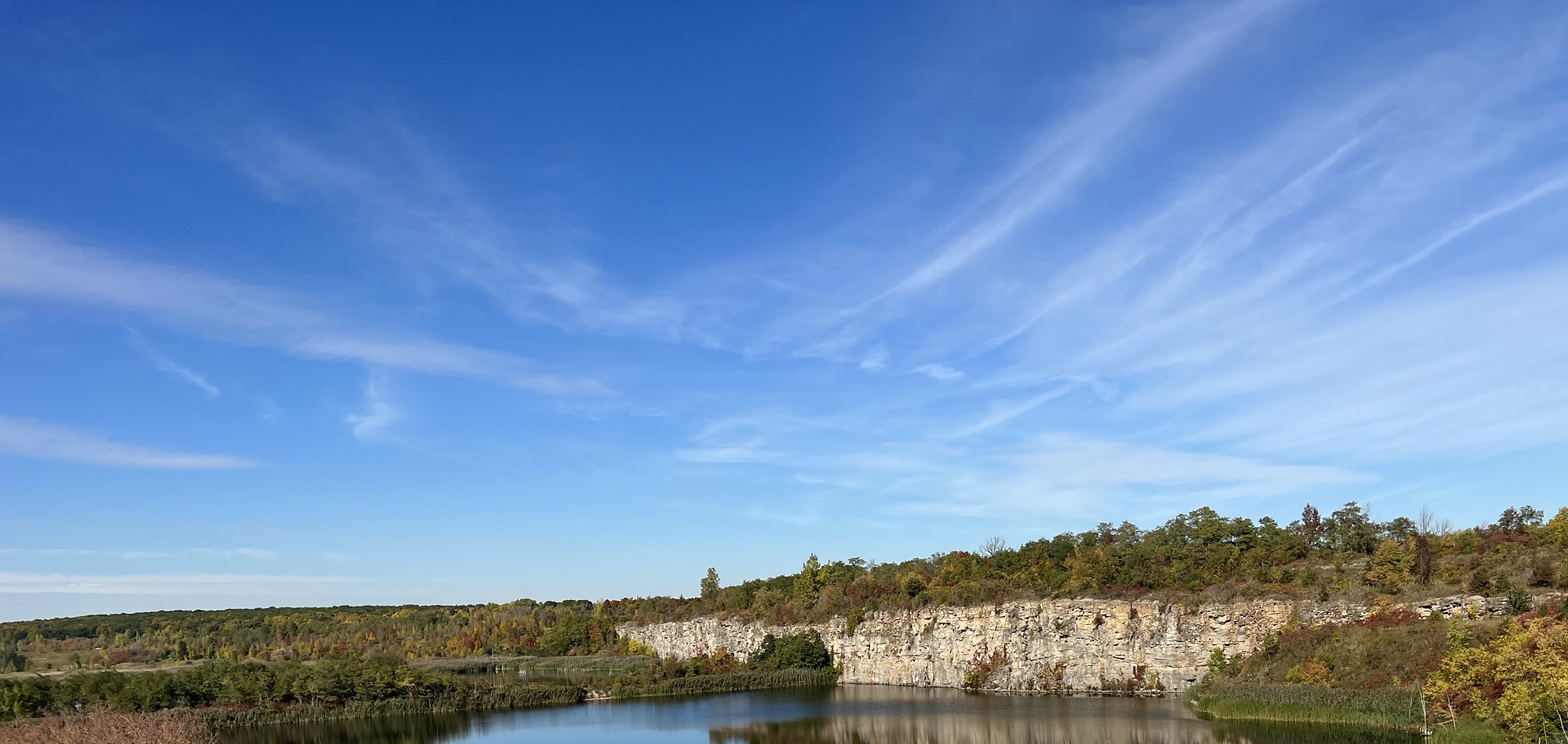
I respectfully disagree with the City of Burlington's position on the Ontario Land Tribunal decision regarding the Nelson Quarry expansion. This is not simply a question of whether a quarry should operate near a small community of homes. It is a question of whether Burlington can plan responsibly for the materials we rely on, protect the natural landscape around us, and secure a meaningful long-term legacy for residents.
A long-standing neighbour and a local resource
The quarry was here long before the homes built across the road from it. That history matters. Communities change, but planning decisions should recognize established land uses and the role they play in the wider region. Aggregate from this site supports the concrete and construction materials used throughout Burlington and nearby communities. Keeping that supply local can reduce the distance materials travel and helps support projects that pursue LEED certification.
Much of the concrete used in Burlington comes from this area. We cannot demand new infrastructure, safer roads, public facilities, housing repairs, and climate-conscious construction while pretending the essential materials for those projects come from nowhere. Responsible local aggregate supply is part of responsible growth.
We should not allow a small number of residents who chose to build or buy homes across from a long-established quarry to decide these matters simply to preserve a morning view of the Mount Nemo Conservation Area. Planning decisions must balance individual preferences with the wider public interest, established land uses, and Burlington's long-term needs.
REMEDIATION IS part of the promise
The future of the site matters just as much as its present use. The owners have proposed remediating land as quarry sections close, returning it toward a natural state while creating opportunities for people to experience this remarkable landscape. The quarry lake, limestone cliffs, and surrounding woodland already show what makes this place special. It is also a destination for rock climbing, with cool water below the escarpment walls.
A thoughtful restoration plan could include a pavilion, tennis courts, and a sunken amphitheatre, or theatron, alongside naturalized areas. Located next to the Bruce Trail, the site could become an asset not only for Ward 1, but for Burlington, Waterdown, Hamilton, and visitors from across the region. This is the kind of long-term vision that can connect recreation, conservation, and community life.
A barrier against urban sprawl
The Nelson Quarry lands also serve an important planning purpose: they help form a natural barrier against urban sprawl. Protecting that function is in Burlington's interest. A restored and responsibly managed landscape beside the Bruce Trail can help preserve the character of the escarpment while giving residents more access to nature and recreation.
A missed public opportunity
I am especially disappointed that Burlington residents have lost the opportunity to own more than 800 hectares of land as quarry operations closed in phases. This was not presented as part of a bargain for expansion. It was an opportunity for land to be gifted to Burlington and restored for public benefit. Council chose not to take that opportunity, and a private group has now stepped in.
That decision deserves honest reflection. Public land, natural heritage, and recreational space are not opportunities we should casually let pass by. Once they are gone, they are difficult—if not impossible—to recover for the community.
The path I support
I support a path that recognizes the quarry's established role, insists on strong environmental safeguards, and holds the operator accountable for meaningful remediation. Burlington should be focused on practical solutions: local materials for local projects, clear standards for operations, remediation as work progresses, and a lasting public benefit from the land.
We can protect the escarpment, support responsible construction, and plan for a future public destination at the same time. That is the balanced, forward-looking approach I believe Burlington needs.
James Kerr, CPA, CMA
Candidate for Councillor, Ward 1